What an Aviation Expert Witness Actually Does for Your Case
A lot of attorneys know they need an aviation expert. Fewer know exactly how to use one.
That’s not a criticism — aviation litigation is genuinely specialized, and if you don’t practice in it regularly, the process can feel overwhelming. This is direct, experienced information about what a qualified aviation expert witness does, step by step, and why each part matters for your outcome.
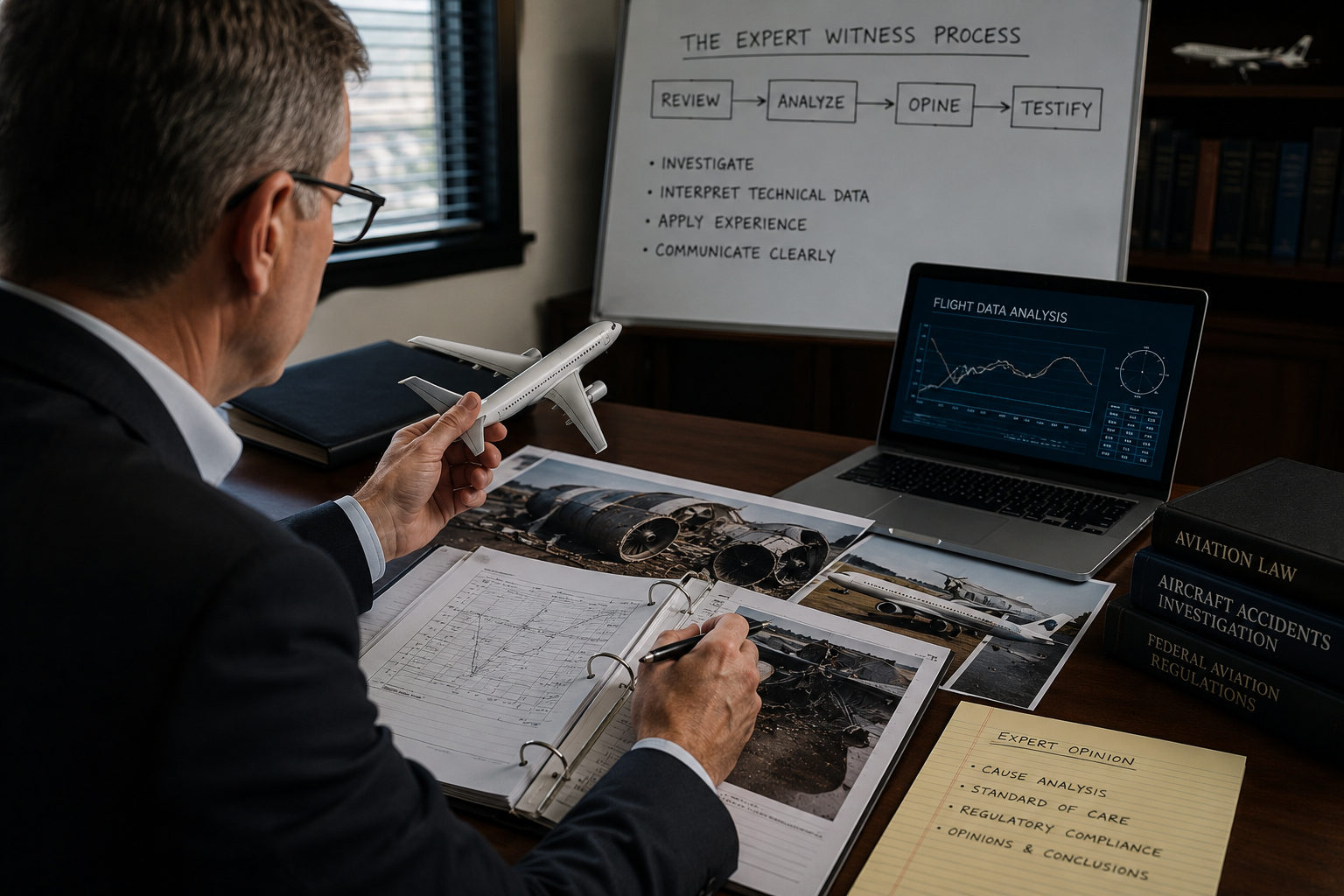
Step 1: Case Review and Initial Assessment
The first thing a good aviation expert does is read everything — the NTSB preliminary and final reports, the accident or incident docket, maintenance logs, air traffic control transcripts, flight data recorder (FDR) and any available cockpit voice recorder (CVR) information.
From that review, a credible expert should be able to tell you relatively quickly:
- What the probable chain of events was
- Whether FAA regulations or industry standards were violated
- Who or what was responsible and why
- Where the case is strong, and where it needs beefing up
This early-stage consultation is often where cases take shape. You learn what questions to ask in discovery. You understand what documents to demand. You know what a deposition should uncover. None of that is possible without someone who can read a flight data readout and tell you what it actually means.
Step 2: Expert Report
Once the investigation is complete, your expert produces a written report — a clear, methodical document that lays out findings, conclusions, and the basis for each opinion.
In federal courts, this report must satisfy the requirements of Federal Rule of Evidence 702 and the Daubert standard. That means the opinions need to be grounded in sufficient facts, reliable methodology, and genuine expertise. A well-crafted expert report not only satisfies Daubert — it becomes a foundation document for your entire legal strategy.
A weak report, on the other hand, invites a Daubert challenge that can remove your expert before trial ever begins. The quality of the expert’s writing, reasoning, and credibility matters.
Step 3: Deposition Support
Opposing counsel will depose your expert. In aviation cases, that deposition will include highly technical questions designed to expose gaps, inconsistencies, or unfamiliarity with specific regulations and procedures.
An experienced aviation expert witness is comfortable in deposition — not just technically, but emotionally, temperamentally. They understand what the opposing attorney is trying to do. They answer precisely, don’t overstate, and hold their ground when challenged on the substance of their opinions.
This is a skill that comes from doing it. Experience in the cockpit tells you what happened in the air or on the ground. Experience in the deposition room tells you how to defend that opinion under pressure.
Step 4: Trial Testimony
At trial, your expert’s job shifts. Now they’re not just speaking to attorneys — they’re speaking to a judge and jury who may have never set foot on an aircraft ramp or read an approach plate.
Effective trial testimony in an aviation case requires the ability to explain complex systems, regulatory frameworks, and human behavior in plain language. It requires analogies that connect. It requires confidence without arrogance. And it requires the credibility that only comes from someone who has lived the industry.
Jurors respond to experts who sound like they know what they’re talking about — and who can also look a layperson in the eye and explain it simply. That combination is rare. When you have it, it can change everything.
Consulting vs. Testifying: Both Have Value
Not every case goes to trial, and not every engagement needs a testifying expert. Sometimes you need a consulting expert — someone who reviews the case behind the scenes, helps you understand the technical landscape, and prepares you to question the other side’s expert effectively.
Legal Eagles Aviation provides both services. Whether you need someone to appear on the stand or someone to sit beside you during a deposition and pass you the right questions, we’re set up to help.